

Phase I – Ontological engineering and clinical design
Co‑designing a dedicated oncology ontology with clinicians: defining key toxicities, vital‑sign‑based triggers, clinical rules, and synthetic stress tests for the explanation middleware.

Phase II – Real‑world data and semantic curation
Integrating and cleaning anonymized historical clinical data, using advanced data quality and clinically constrained imputation techniques to build a robust dataset for model training.

Phase III – Predictive core and explainability
Training temporal AI models to detect early deterioration patterns within a 24‑hour horizon and coupling them with a clinical knowledge graph so that each prediction is paired with a structured, clinician‑friendly explanation.
Phase IV – Silent prospective pilot
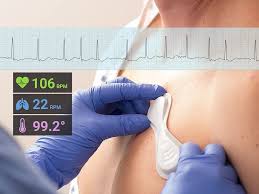
Controlled deployment in real clinical practice, with patients monitored at home and a “silent mode” that compares ARMONEX alerts against real‑world outcomes, without interfering with patient management or safety.

Phase V – Scaled clinical adoption
Production rollout of ARMONEX as a regulated, hospital‑grade decision support service, integrated into oncology workflows and EHRs, with alerts actively supporting triage and tele‑oncology.